

For most industrial companies, the largest share of their carbon footprint never passes through their own gates. It travels in trucks, aircraft and ships operated by others, and until very recently there was no common rule for counting it.
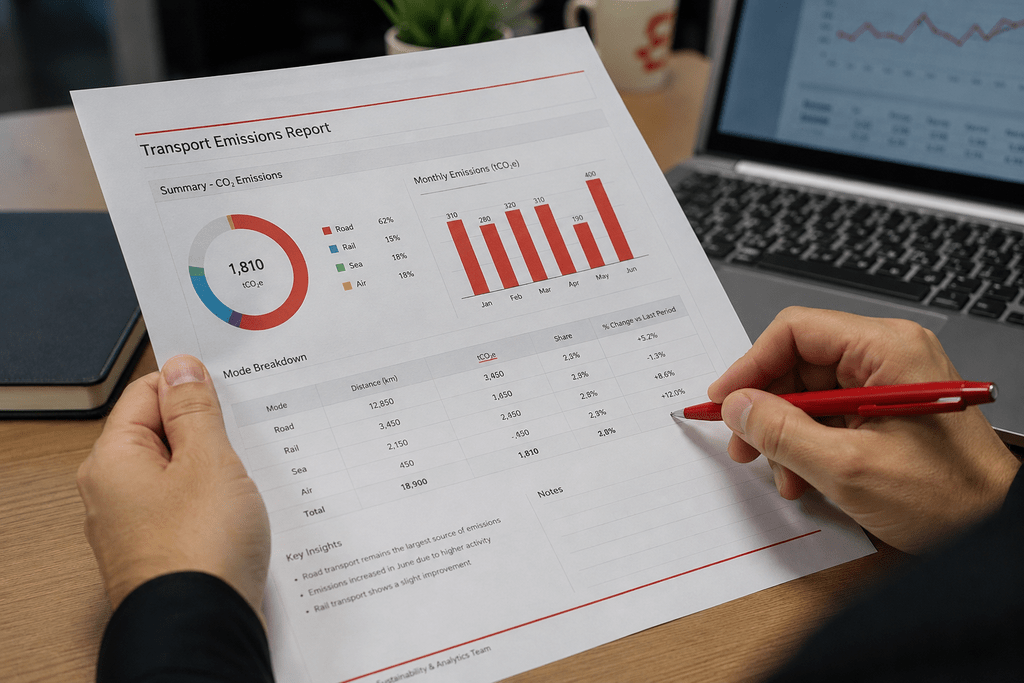
That changed on June 1, 2026, when the European Union put a single methodology for transport emissions into force. For anyone who buys urgent transport or regular freight, the way emissions are measured is about to shape the way freight is bought.
Why Scope 3 has moved to the top of the supply chain agenda
Scope 3 covers the indirect emissions that occur across a company’s value chain, and transport sits near the center of it. Because these emissions belong to suppliers and carriers rather than the reporting company itself, they have long been the hardest category to measure and the easiest to postpone.
The scale of the gap is now well documented. Research by CDP and Boston Consulting Group found that supply chain emissions are on average 26 times higher than a company’s operational emissions, yet only 15 percent of corporates have set a Scope 3 target and only 4 in 10 engage their suppliers on climate at all.
Freight itself is a major part of the picture. According to data compiled by the United Nations from International Transport Forum figures, freight activity accounts for roughly 7 percent of global greenhouse gas emissions, and its share of transport emissions is projected to reach 60 percent by 2050.
Consequently, pressure that once stopped at the reporting company’s door is moving down the chain to the companies that actually move the goods. That is exactly the point where new European rules now come into play.
What CountEmissionsEU changes for freight buyers
The new framework is called CountEmissionsEU, and its ambition is simple: one science based method for calculating greenhouse gas emissions, valid for every transport mode, from door to door. The European Commission confirmed the rules took effect on June 1, 2026.
The methodology builds on the international standard EN ISO 14083:2023, which keeps European figures comparable with global reporting. Disclosure itself remains voluntary, but any company that chooses to publish transport emissions must now follow the same standardized approach, with implementing acts expected through 2030.
For freight buyers, the practical effect is comparability. When every quote can carry an emissions figure calculated the same way, procurement teams can weigh carbon next to price and transit time, and inflated green claims become much harder to sustain. Meanwhile, the biggest reduction lever is already known: Eurostat reports that about a fifth of all road freight kilometres in the EU are driven by empty vehicles.
As a result, emissions data stops being a yearly reporting exercise and becomes an operational tool, shipment by shipment. The logistics providers able to measure at that level are the ones tenders will ask for first.
How logistics networks are preparing
Some logistics networks are already treating emissions data as part of service quality rather than a separate sustainability report. At Flash, we see sustainable freight and reliable freight as the same discipline: both depend on measuring each movement precisely.
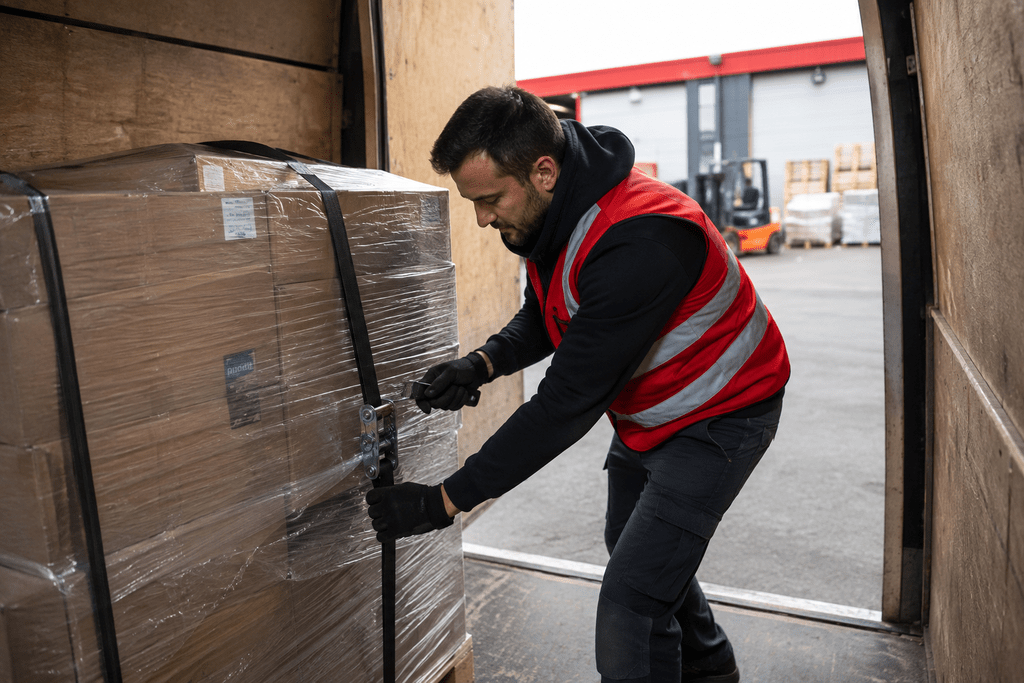
In practice, this starts with the dispatch decision. Choosing the right vehicle size for each load, consolidating when the deadline allows it and reserving express capacity for true urgency all lower emissions per shipment. Smart shipping tools then document each movement, so the figure a customer reports is grounded in real routes rather than estimates.
Furthermore, network design matters as much as technology. A partner based logistics network keeps vehicles closer to the loads they carry, which cuts empty kilometres, while a hybrid mix of regular and on demand freight avoids running oversized capacity for demand that may never come.
For customers in the automotive, aerospace and healthcare industries, this changes the conversation with providers. From an operational perspective at Flash, trust now extends to the numbers behind each delivery, and agile logistics is what keeps those numbers improving.
The road ahead
Harmonized emissions data will not stay inside sustainability reports for long. It will flow into tenders, carrier scorecards and customer contracts, and companies that can already produce a verifiable figure per shipment will answer those questions from experience rather than estimation.
The future of logistics will belong to those who adapt continuously: not by choosing between regular and on demand freight, but by mastering the balance between both, with emissions visible on every movement and trust extending all the way to the numbers.
Frequently asked questions
What are Scope 3 emissions in freight transport?
Scope 3 emissions are the indirect greenhouse gas emissions that occur across a company’s value chain, including the transport of goods by third party carriers. For many industrial companies they are the largest category: CDP research shows supply chain emissions are on average 26 times higher than operational emissions.
What is CountEmissionsEU?
CountEmissionsEU is the European Union framework that establishes a single, science based methodology for calculating greenhouse gas emissions from transport services across all modes, from door to door. It took effect on June 1, 2026 and builds on the international standard EN ISO 14083:2023.
Is CountEmissionsEU mandatory?
Disclosure remains voluntary. However, any company that chooses to publish transport emissions data in the EU must calculate it using the standardized methodology, which makes published figures consistent, comparable and verifiable.
How can shippers reduce freight emissions?
The main levers are filling empty kilometres, choosing the right vehicle size for each load, consolidating shipments when deadlines allow and reserving express options for true urgency. Eurostat estimates that about a fifth of EU road freight kilometres are driven by empty vehicles, so better load matching delivers immediate gains.
Why do Scope 3 emissions matter in freight procurement?
Customers increasingly ask their logistics providers for emissions figures to complete their own Scope 3 reporting. With a harmonized methodology in force, procurement teams can compare carbon per shipment alongside price and transit time, making emissions part of the buying decision.