


Schengen’s 90 Day Rule: What the Balkan Trucker Protests Mean for European Freight
Schengen 90 Day Rule Explained: Trucker Protests 2026 On the morning of 31 August 2026, drivers parked more than twenty trucks outside the European Union Delegation in Skopje. The same scene played out in Belgrade, Sarajevo and Podgorica, where hauliers gathered between midday and two in the afternoon under one
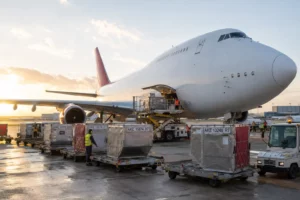
Q4 Air Freight Capacity: What Rising Fuel Costs and Tight Belly Space Mean for Shippers
In the last week of August, a freight forwarder in Frankfurt watched a quote for wide body space to Chicago change twice in five days. The first increase came from a fuel surcharge adjustment. The second came because the flight had simply sold out of pallet positions. Six weeks before

Scope 3 Freight Emissions: What CountEmissionsEU Changes for Shippers
For most industrial companies, the largest share of their carbon footprint never passes through their own gates. It travels in trucks, aircraft and ships operated by others, and until very recently there was no common rule for counting it. That changed on June 1, 2026, when the European Union put
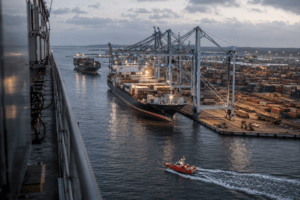
The Total Cost of a Missed Production Window: A Framework for OEMs
For a logistics director, a rerouted vessel thousands of kilometers away rarely feels urgent until the day it is. What starts as a routing decision on an ocean carrier’s network eventually shows up as a gap on an assembly line, and the freight premium paid to close that gap is

AI in Freight Dispatch: How Intelligent Routing Is Changing Urgent Logistics
The gap between a disruption alert and a rebooked shipment used to be measured in hours. AI dispatch systems are compressing it to seconds. For logistics directors managing time-critical freight, that gap is where competitive advantage is won or lost. What AI dispatch actually does Freight dispatch used to mean

On-Demand vs. Consolidated Freight: A Total Cost of Ownership Comparison for OEMs
A freight rate is only one line on a much longer invoice. For OEMs balancing consolidated lanes against on-demand capacity, the real comparison is about where risk lives, and what it costs to carry it. The hidden math behind a shipping rate Procurement teams have used total cost of ownership