

A biologic shipment lands, rolls off the aircraft, and waits. Forty minutes on an open tarmac while ground handlers clear a queue of other cargo, the temperature display on its active container ticking past the 8°C ceiling nobody in the chain is watching in real time. By the time the box reaches a cold room, the paperwork still says compliant. Whether the drug inside still is depends on that forty minutes, not on the eleven hours it spent at cruising altitude.
That gap between what a certificate promises and what actually happens on the ground is where pharma cold chain logistics is won or lost, and it is worth being precise about what premium air freight can and cannot guarantee.
Why pharma freight runs on trust, not on speed alone
Demand for temperature controlled pharma logistics is climbing fast. The global pharmaceutical cold chain logistics market was valued at roughly 22.75 billion dollars in 2025 and is projected to more than double by 2033, driven largely by biologics, GLP-1 formulations, and cell and gene therapies that carry both a narrow temperature window and a high replacement cost if that window is missed.
Yet air freight still carries a fraction of the pharma volume that moves by sea, and the reason is not price. It is trust. Industry estimates attributed to IATA have long put vaccine degradation from cold chain failures at roughly a quarter of shipments, with the majority of excursions traced back to airline and airport handling rather than the flight itself. That statistic is the whole argument for why "we fly it, so it is safe" was never a sufficient standard, and why shippers now ask harder questions of any partner claiming premium handling.
What CEIV Pharma and GDP compliance actually guarantee, and what they do not
IATA's CEIV Pharma program is the closest thing the industry has to a common baseline: audited quality management, trained personnel, calibrated equipment, and alignment with EU Good Distribution Practice. Certified facilities report meaningfully fewer excursions than non-certified ones, and it remains a legitimate filter when choosing a handling partner.
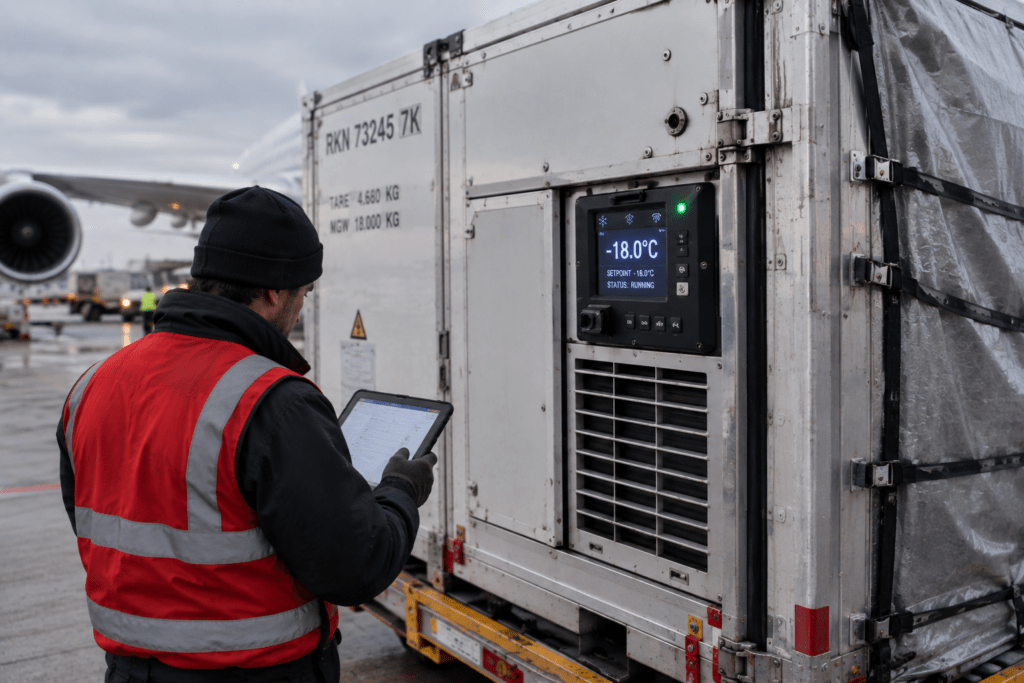
What certification does not fully solve is timing. Recent analysis of pharmaceutical air cargo points to the ground transfer dwell period, the window between an aircraft offloading a shipment and that shipment re-entering a temperature-controlled facility, as the primary and most under-monitored thermal risk in the entire journey. Active containers with their own power source hold temperature through a delay; passive containers relying on insulation and gel packs have a shorter clock. Either way, the equipment only buys time. It does not replace a partner whose ground process is actually built to minimize how much of that time gets used.
How Flash approaches pharma freight
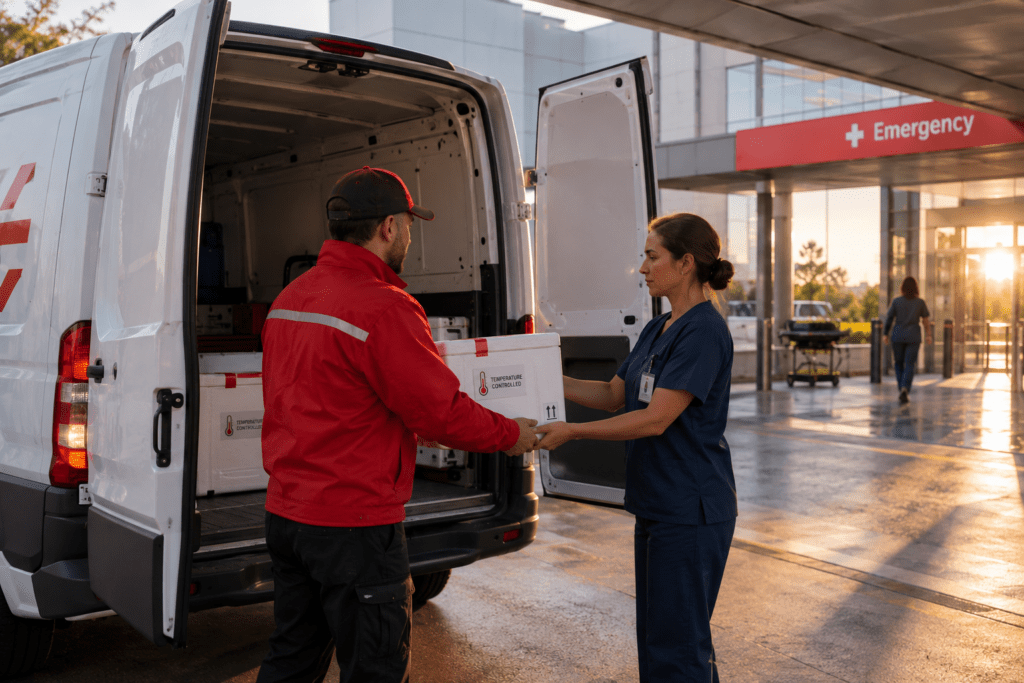
This is the practical reason network design matters as much as certification paperwork. A partner based logistics network with depth across lanes can route a shipment through fewer intermediate stops, and every stop removed is one less dwell window where a temperature excursion can start. Pairing that with on-demand, hybrid road and air capacity means a shorter regional leg does not have to go through a hub simply because that is where the contracted lane runs, which is often where unnecessary tarmac transfers get added to a route that did not need one.
Large integrators are responding to the same pressure by building dedicated capacity, including a newly expanded pharma-only air network with its own branded freighter aircraft announced earlier this year. That investment says something true: the industry agrees the current handoff-heavy model is not good enough. At Flash, the same problem is addressed through network depth and route selection rather than owned aircraft, so a shipment for healthcare and life sciences customers can move on the path with the fewest handoffs for that specific lane, not the path a fixed network happens to offer.
The real guarantee is fewer handoffs, not more certificates
A certificate on file is necessary. It is not what keeps a biologic at 5°C through an unplanned ground delay. That comes down to how a shipment is actually routed, how many hands it passes through, and how much of the journey sits in a monitored facility instead of a queue on the tarmac. As biologics and cell and gene therapies make up a growing share of what moves by air, the shippers asking the sharpest questions about handoffs, not just certifications, are the ones building a cold chain that holds.
If pharma or healthcare freight is part of your network, it is worth asking your current provider exactly how many handoffs a shipment goes through between origin and destination, and how each one is monitored. Get in touch to talk through your specific lanes.
Frequently asked questions
What is IATA CEIV Pharma certification?
CEIV Pharma is an IATA certification program that audits airlines, freight forwarders, and ground handlers against a common set of pharmaceutical handling standards, covering quality management, trained personnel, calibrated equipment, and alignment with Good Distribution Practice.
What temperature range applies to most pharmaceutical air shipments?
Most biologics and vaccines require a controlled range of 2 to 8°C. Some cell and gene therapies require deep frozen or cryogenic conditions well below zero, which demands specialized active containers rather than standard passive packaging.
Where do most temperature excursions in pharma air freight actually happen?
Recent analysis points to ground transfer dwell time, the period between an aircraft offloading a shipment and that shipment re-entering a temperature-controlled facility, as the primary and most under-monitored risk window, rather than the flight itself.
What is the difference between active and passive ULDs?
Active ULDs carry their own power source and can maintain a set temperature regardless of outside conditions. Passive ULDs rely on insulation and pre-conditioned gel packs, which hold temperature for a limited window before it begins to drift.
Does flying a pharma shipment by air guarantee cold chain integrity?
No. Air transit time is short, but every handoff between the aircraft and a monitored facility introduces risk. A shipment with fewer intermediate stops and less unmonitored dwell time is generally better protected than one that simply moved by air.
Why does network design matter for pharma cold chain reliability?
A logistics network with route depth can move a shipment through fewer intermediate stops, reducing the number of handoffs and the total dwell time outside a temperature-controlled environment, which is where most excursions originate.