

It is 02:40 at a hub airport in southern Europe. During the final walkround before the first wave of departures, an engineer finds a hydraulic leak on a narrowbody’s main landing gear. The aircraft is declared AOG, aircraft on ground, and four morning rotations now depend on a part sitting in a stores facility more than 1,000 kilometres away.
From that moment the problem is no longer technical. It is logistical: how many hours will separate the AOG declaration from a serviceable part at the hangar door?
Why every grounded hour shows up on the P&L
A grounded aircraft keeps costing money while earning nothing. Lease payments, crews on standby, passenger rebooking, compensation and an aircraft out of position for the next day’s schedule all accumulate at once. Boeing’s long standing estimate, reported by FLYING Magazine, puts a single hour of AOG at US$10,000 to US$20,000, rising to as much as US$100,000 in some circumstances.
The wider market is making those hours harder to avoid. IATA estimates that aerospace supply chain bottlenecks cost airlines more than US$11 billion in 2025, including US$1.4 billion spent holding extra spare parts as a buffer. The average fleet age has climbed to 15.1 years, and older aircraft need more frequent and more expensive maintenance.
Parts are also harder to find. Reuters reporting from August 2026 found that engine maintenance spending at six large US airline operations rose about 68 percent between 2019 and 2025, while hours flown grew only around 10 percent. With fewer engines being dismantled for parts, airlines rely more on new components from manufacturers, which often sit far from the aircraft that needs them.
For logistics directors at airlines, MRO providers and parts distributors, the conclusion is simple. The part is rarely the expensive element. The hours spent moving it are.
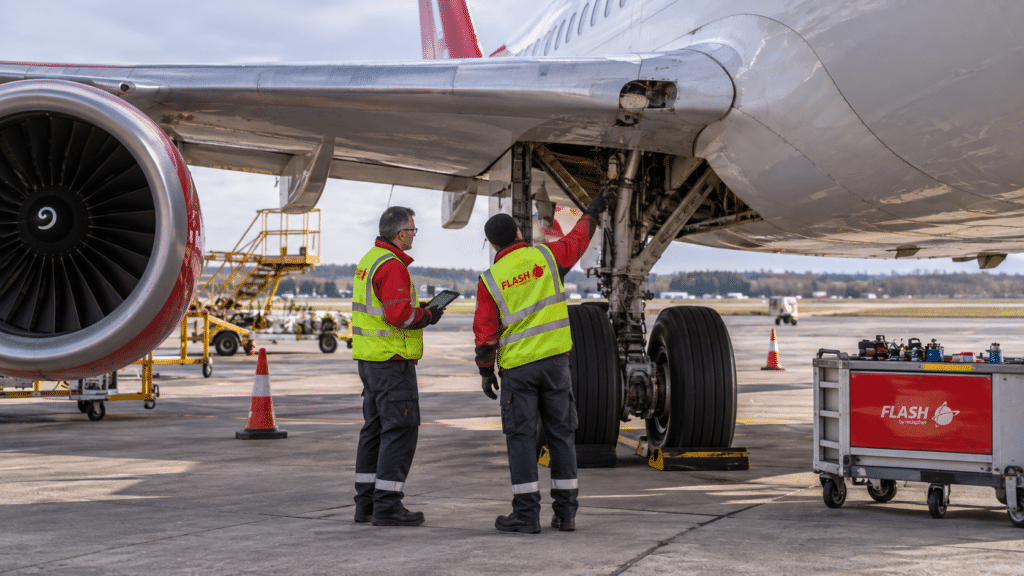
What an AOG part movement requires, from booking to hangar door
An AOG shipment is not simply a fast delivery. It is a chain of steps in which any single delay resets the clock. Breaking it down shows where hours are won or lost.
- Booking and qualification. The request needs the part number, dimensions, weight, collection address and the exact delivery point, whether a line maintenance station, an MRO hangar or an airside cargo terminal. A team available around the clock confirms the routing within minutes, not at the next office opening.
- Collection from stores. A vehicle is dispatched to the stores facility and the airworthiness paperwork is checked at pickup. A part that arrives without its release certificate, an EASA Form 1 or its FAA equivalent, cannot be fitted, however fast it travelled.
- Mode decision. Within a region, a dedicated vehicle driving through the night often beats air freight, because it avoids cut off times, security screening and handling at two airports. On longer legs, next flight out air freight takes over, with road collection and delivery at each end.
- Customs and security. Cross border moves outside the EU need export and import clearance prepared in parallel with the transport, not on arrival. Some components also require dangerous goods documentation.
- Live tracking and exception handling. Every milestone is monitored, so an offloaded flight or a closed motorway triggers a reroute before it costs a rotation.
- Delivery to the hangar door. The final metres are often airside or inside a restricted MRO site. Access is arranged in advance and a named recipient signs for the part.
In practice the flight is rarely the longest stage. Most hours are lost on the ground: a collection that waits for a driver, a missing certificate, a cut off missed by twenty minutes. It is the same arithmetic set out in The Total Cost of a Missed Production Window: the cost of downtime dwarfs the premium paid to avoid it.
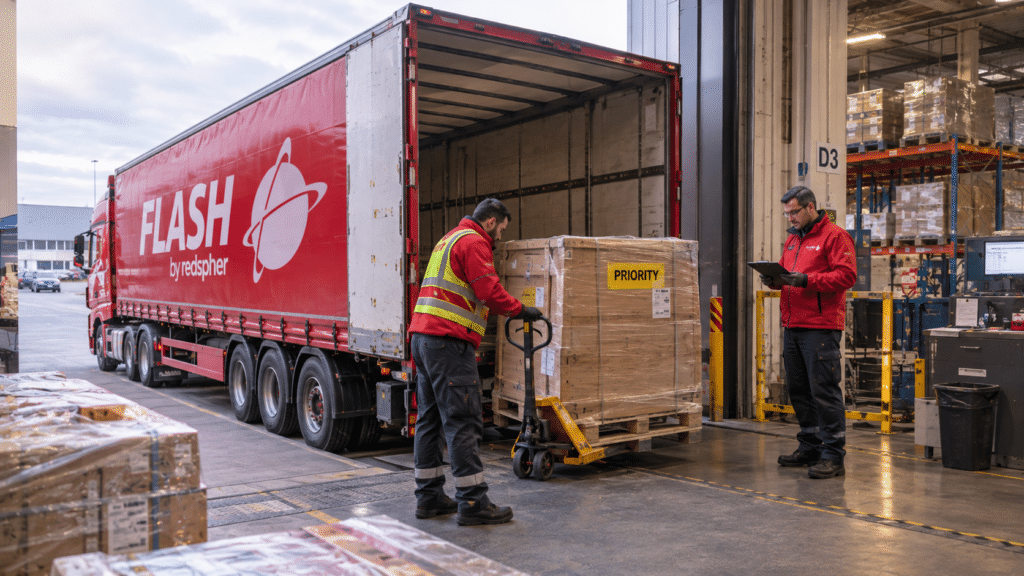
How time critical logistics shortens the AOG clock
Airlines and MRO providers are responding on two fronts. The first is inventory: IATA recommends pooling spare parts and sharing maintenance data to reduce downtime. The second is logistics readiness, meaning providers agreed in advance, documented procedures and a single contact who answers at three in the morning.
At Flash, an AOG request is handled the way our network handles every time critical shipment. With 43 partner agencies across 23 countries on five continents, a vehicle can usually be dispatched close to where the part sits, and the choice between dedicated road and next flight out air is made against the clock rather than by habit. A control tower follows each movement from booking to delivery and acts on exceptions as they appear. For aerospace customers, this is the same on demand model we apply across all our vertical markets.
The financial logic mirrors what shippers face during peak season. Reserved, contract based capacity rarely fits an event that cannot be scheduled. On demand capacity, priced per movement and available at any hour, does.
Building AOG readiness into the 2027 plan
Year end planning is the right moment to treat AOG response as a budget line rather than an emergency. Three steps reduce exposure: qualify an AOG logistics partner before the next event, so onboarding and paperwork do not add days; map where critical rotables are stored relative to your main stations; and agree escalation rules so the operations team knows exactly when road gives way to air.
Engine groundings are easing, yet Reuters notes that the leases, repairs and parts bills they created will take far longer to fall. Fleets will stay older while delivery backlogs clear. The operators that keep aircraft flying will be those able to move a single part across a border overnight, with every certificate in order.
To plan AOG coverage for your stations and suppliers, talk to our team.
Frequently asked questions
What does AOG mean in aviation?
AOG stands for aircraft on ground. It means an aircraft cannot fly until a part is replaced or a repair is signed off, and it triggers the highest priority response in airline maintenance and logistics.
How much does an AOG event cost per hour?
Boeing’s widely used estimate puts one hour of AOG at US$10,000 to US$20,000, and up to US$100,000 in some circumstances. The figure depends on aircraft type, route, passenger compensation and knock on effects across the schedule.
How quickly can an AOG part be delivered?
It depends on distance and mode. Within a region, a dedicated vehicle can often deliver the same day or overnight. Intercontinental moves usually rely on next flight out air freight with road collection and delivery at both ends. Most delays happen on the ground rather than in the air.
When is road faster than air for AOG parts?
Over regional distances, a dedicated vehicle avoids airline cut off times, security screening and handling at two airports. For many European routes, driving through the night delivers the part sooner than the first available flight.
What documents travel with an AOG part?
The part needs its airworthiness release certificate, an EASA Form 1 or its FAA equivalent. Cross border shipments also need export and import customs documents, and some components require dangerous goods paperwork.